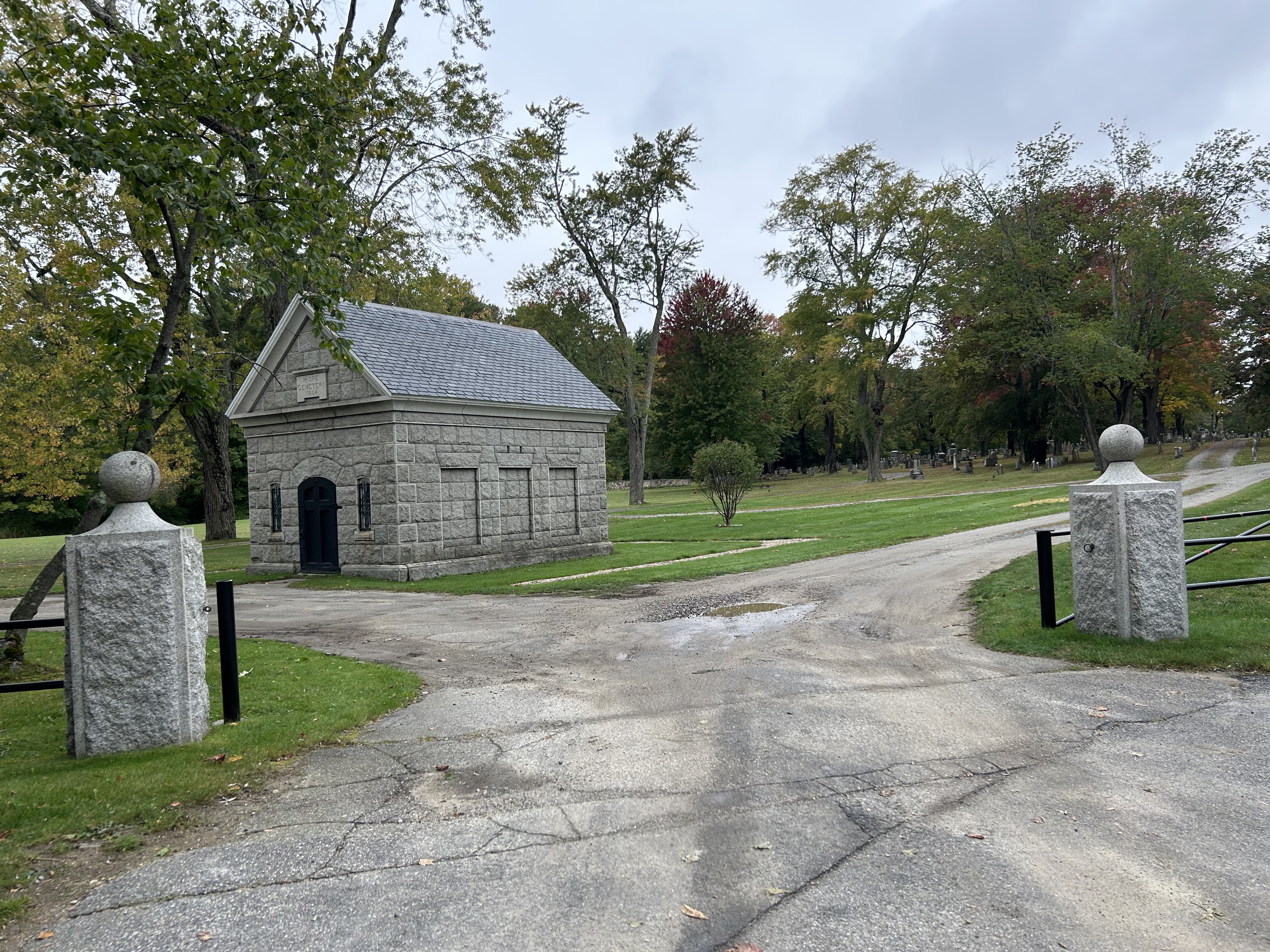
KENNEBUNK — The receiving tomb to Hope Cemetery will be restored In order to ensure that it remains usable and to protect its historic significance.
A $29,900 grant from the Maine Historic Preservation Commission to Kennebunk and the Hope Cemetery Corporation will be used to repair the granite along the exterior of the tomb walls. The granite blocks need to be reset and anchored to fix structural problems caused by groundwater and the stress of winter freezes and thaws over time. The tomb’s interior concrete floor is also deteriorating, and the grant will pay for a replacement.
The tomb provides temporary storage for caskets awaiting burial during winter, when the frozen ground does not allow for interment. The tomb can accommodate as many as 19 deceased people from mid-December to April, according to Hope Cemetery Superintendent Tom Litchfield. The tomb also serves other area cemeteries, he said.
Built in 1904, the tomb is a historic feature of the cemetery, which is within the Kennebunk Historic District, listed on the National Register of Historic Places.
Louise Spang, President of Hope Cemetery Corporation, thanked the Maine Historic Preservation Commission for recognizing the importance of preserving the tomb.
“This is an excellent example of how partnerships between the town, Hope Cemetery Corporation, and state and federal historic preservation organizations can help protect Kennebunk’s historic resources for future generations,” she said in a news release.
The grant is provided by the Historic Preservation Fund and National Park Service and administered by the Maine Historic Preservation Commission.
The history of Hope Cemetery dates back at least to the early 19th century, although accounts differ on when the burial ground was established.
Some records identify 1790 as the year of the cemetery’s first burial, and established the site as a small burying ground next to the First Parish Church, now the First Parish Unitarian Universalist Church of Kennebunk. However, research into property deeds has not established that a cemetery existed at the site before 1817.
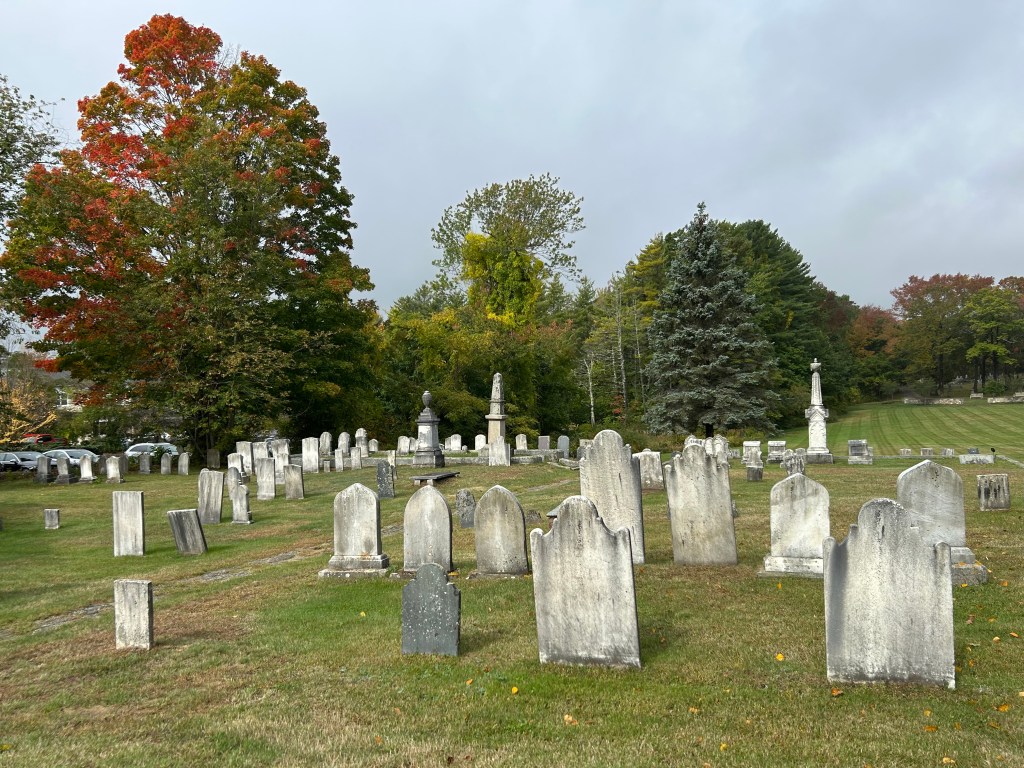
The cemetery was established to serve as a central, permanent burial ground for the community. Once opened in 1817, some families relocated their loved ones from other burial grounds to the new cemetery for both practical and sentimental reasons.
One of the earliest recorded reinterments was reportedly that of Hannah March Storer, who died in 1790 and whose son moved her remains to Hope Cemetery, according to historical accounts.
She was the widow of Col. Joseph Storer who served in the Revolutionary War, and the couple had established their family in Kennebunk.
The tomb contains a unique feature with an unusual history, Litchfield said, pointing to a rope hanging from its ceiling.
“That rope used to hold a bell and in the old days, they didn’t embalm people so when they got out of the casket, they would pull the bell if they ended up alive,” he said.
The story reflects a longstanding fear of premature burial, particularly before modern embalming techniques became widespread, during the American Civil War.
Work on the Receiving Tomb is expected to begin later this fall with completion in the spring of 2027, the news release stated.
ABOUT HOPE CEMETERY
The cemetery was established in 1817. The cemetery’s database of all registered burials is available for those doing genealogical or historical research. A Grave Finder map is available to find burial locations.
The 30-acre garden-style cemetery is adjacent to 72 acres of protected woods and meadows known as Hope Woods.