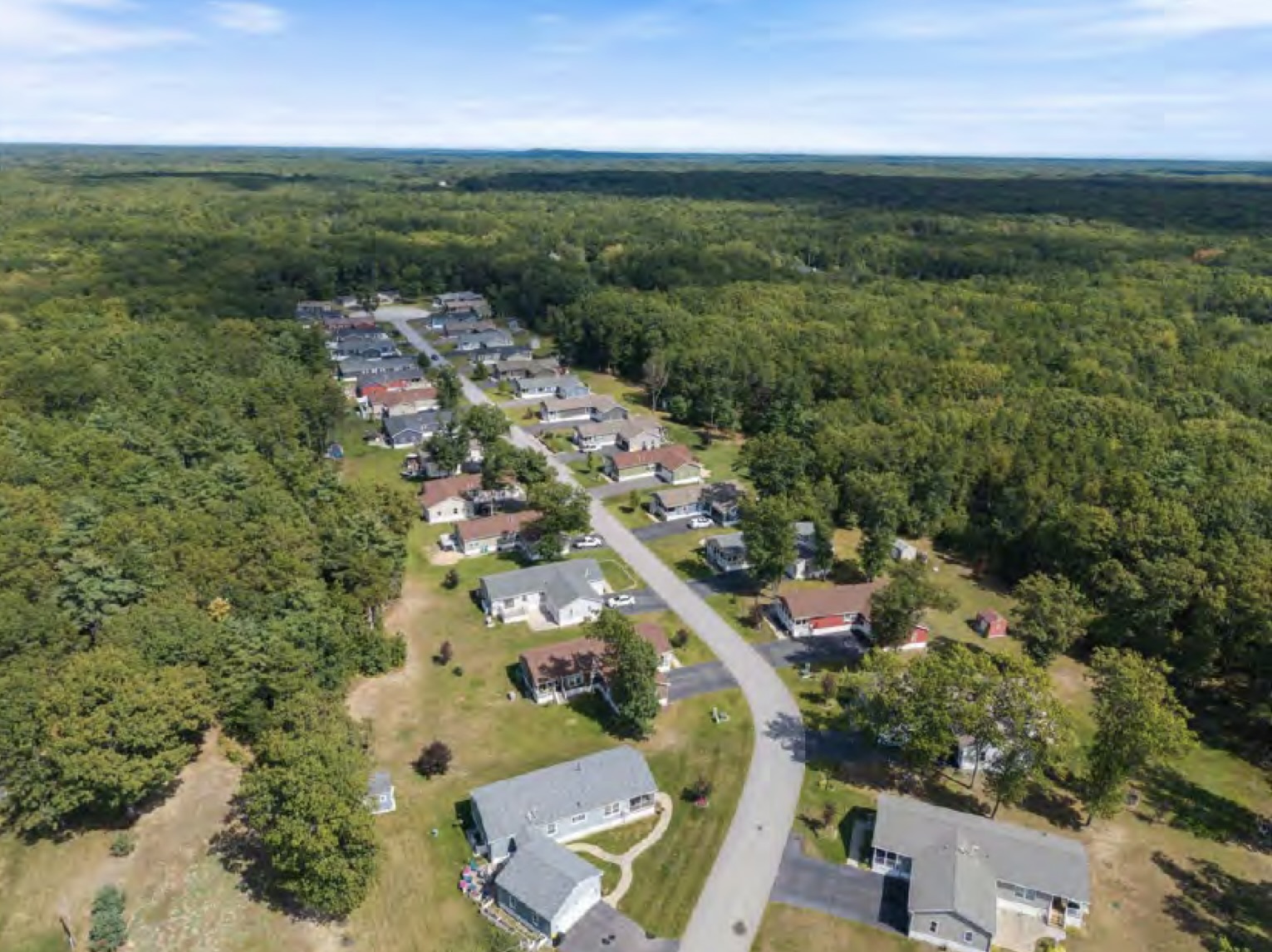
KENNEBUNK — A developer’s plan for a mobile home park in West Kennebunk drew scrutiny from the planning board on whether the homes would remain affordable for buyers, even after the company trimmed its unit count.
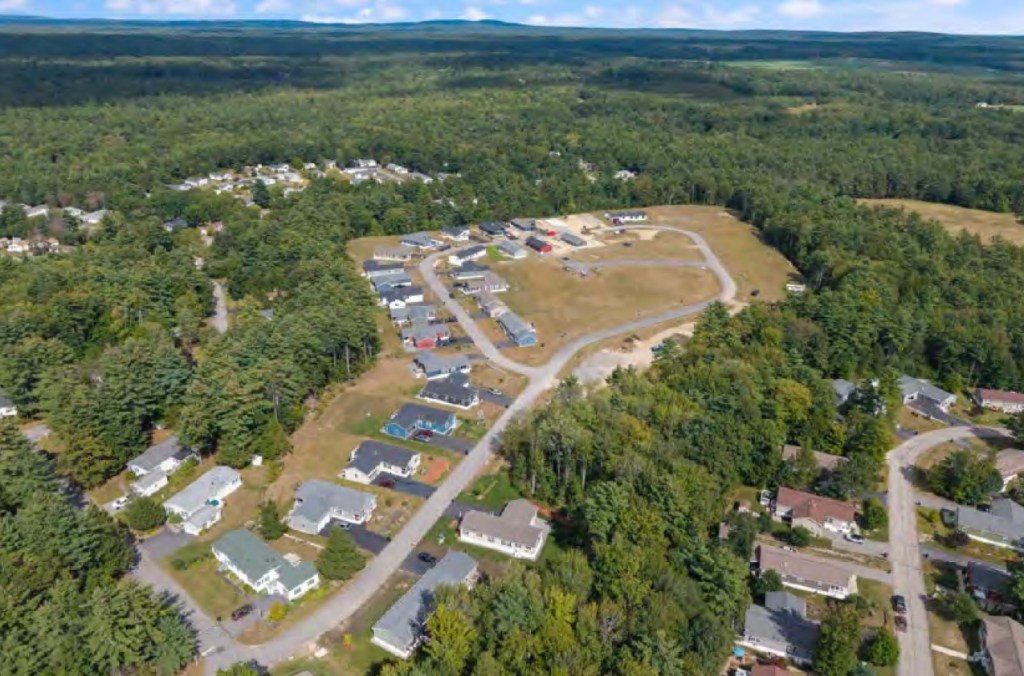
Mobile home developer Abode Communities Kennebunk LLC, in August proposed to build an approximate 200-unit park. Developers returned to the Kennebunk Planning Board last week with a revised sketch for the park, which would sit on Alewive Road with a secondary entrance/exit on Trumans Field Road, off nearby Thompson Road.
Developers plan to cut the mobile home park from 192 to 183 units.
Board members praised the redesigned internal road and improved access to open spaces. But they expressed concerns about affordability, issues with the site’s access, wetlands and landscaping, plus the project’s impact on the community.
“There is no doubt that we need more affordable housing in this town, we hear that a lot, we hear that all the time,” Chris MacClinchy, chair of the planning board, said. “We also hear a lot of complaints that there’s too much development happening. It’s hard to do one without the other.”
Questions about affordability
The town’s ordinance requires that at least half of the units of any mobile home community must be affordable to households at or below 80% of the median household income for nonmetropolitan York County. U.S. Housing and Urban Development data provided by Google puts median nonmetropolitan York County income in 2026 at $106,800.
The park would be a “land lease” neighborhood, meaning a home owner purchases the dwelling, but the developer owns the land beneath it. This arrangement is common for mobile home parks, but it complicates the situation because the ordinance states that “shelter costs,” which includes mortgage and/or rental costs, taxes, utilities and insurance, should not exceed 30% of the area median income.
The ordinance also states that future sales and rents will be maintained at the rate approved by the Planning Board for at least five years after project completion.
Blaine Burnett, co-founder of Abode, said units will sell for between $200,000 to $450,000, depending on whether they offer one, two or three bedrooms.
Board members worry that even if the units are affordable now, they could be sold at a higher rate in the future. Five years after purchase, an original mobile home unit owner could sell their home at market value, causing the board to question if a mobile home park is a long term solution to the town’s affordability problem.
Abode plans to build the mobile home park in four phases, and the board members said they were unsure when the five-year rule would start and stop.
MacClinchy said he also was concerned about the trend of mobile home park developers selling to equity firms and other corporations, often resulting in rent increases under new management.
“One of the concerns that we have is something like this gets approved to help market rate affordable housing — like to get people in starter homes, [but in a sell-off worst case scenario] I don’t want to get people trapped and stuck with leases that keep going up and up and up,” he said.
Burnett agreed. “You are correct and, yes, we’re open to all of those discussions. Our average rent increase for the 10 years we owned most of those projects was $15 a year or under,” he said.
Burnett said the reason he sold the parks he once once owned in New England was due to the death of his business partner Stephen Hynes, who was a Canadian citizen. “The IRS was not kind to (Hynes’) surviving wife and we had to sell everything,” Burnett said.
One of the projects he sold was Keywood Manor, a mobile home park located west of the Town of Kennebunk near where Old North Berwick Road intersects with Pools Crossing Road, a patch of land overlapping the town border of Alfred and Lyman.
Site concerns
Echoing comments from the August presentation, at least three members cautioned that the project would need a third means of access because of safety and traffic concerns. Secretary Janice Vance said 30 homes impinged on wetlands and would need to be moved.
The topic of landscaping also drew attention.
Burnett showed slides and videos of other parks he once owned in the area and said he believes trees provide the character for the community. “We plant trees back,” he said.
Kevin O’Rourke, an alternate member of the board, said the West Kennebunk plan shows little landscaping.
“This to me looks like a forest that’s going to be clear cut to make way for a large development, and then there’ll be some small trees, you know, five gallon trees planted around, that won’t look like much for another 15 or 20 years, really. So that part is a little disheartening.”
To the best of anyone’s knowledge, the town of Kennebunk has never had a mobile home park.
Community impact
Town Engineer, Director of Community Development Chris Osterrieder, said earlier in the meeting that the mobile home park has triggered a “traffic movement permit process,” and that Abode actually requested to incorporate and identify other nearby developments at the same time.
Osterrieder said the town would initiate a community impact analysis to be done by an independent party as a means to predict how the project would affect community resources. The community impact study, which Osterrieder described as robust, would take about six weeks to complete.
The board scheduled a site walk for Nov. 14 at 8 a.m.