(The Local News accepts written contributions from non-staff volunteers on topics that we believe will be of general interest to our communities.)
Contributed by Kevin Mullan
Seasonal Outreach Coordinator, Maine Audubon
As of June 5th, Goose Rocks Beach is home to 22 pairs of piping plovers, an increase from 14 last year. The only beach in Maine with more pairs is Wells Beach with 23 pairs. Among the other beaches in Kennebunkport and Kennebunk, Parsons Beach is home to six pairs, Crescent Surf with two pairs and Marshall Point with one pair. Including all of the state beaches, there are now 87 chicks hatched.
Our beaches are critical habitats for piping plovers, but tourist season threatens this endangered shorebird. Piping plovers are gray and sandy-colored and about six to seven inches in length. Breeding adults have bright orange legs and an orange beak with a black tip, a black “unibrow” on the forehead, and a thick black band around their neck. For the past few months, these tiny birds have been staking out territory, pairing up and nesting.
The vulnerable period from when chicks hatch to their first flight is roughly 25 to 35 days. While many bird species will feed their chicks, Piping Plovers are precocial, meaning that within hours of hatching, they are moving around and foraging for themselves. Without being able to fly, their best defense is to use their speckled sandy-colored down feathers as camouflage. They freeze in place to avoid being detected by their long list of predators, including crows, foxes, gulls, outdoor cats and off-leash dogs. While camouflage works well against their natural predators, it can make chicks harder for unsuspecting humans to spot. Beachgoers should watch their surroundings carefully to avoid disturbing or injuring chicks. And while you may have the best intentions, never handle a piping plover chick, even if it appears injured. Those concerned about the welfare of a chick should instead contact Maine Audubon’s Plover Hotline (207-245-2353), Maine Department of Inland Fisheries and Wildlife (207-657-2345) or town officials.
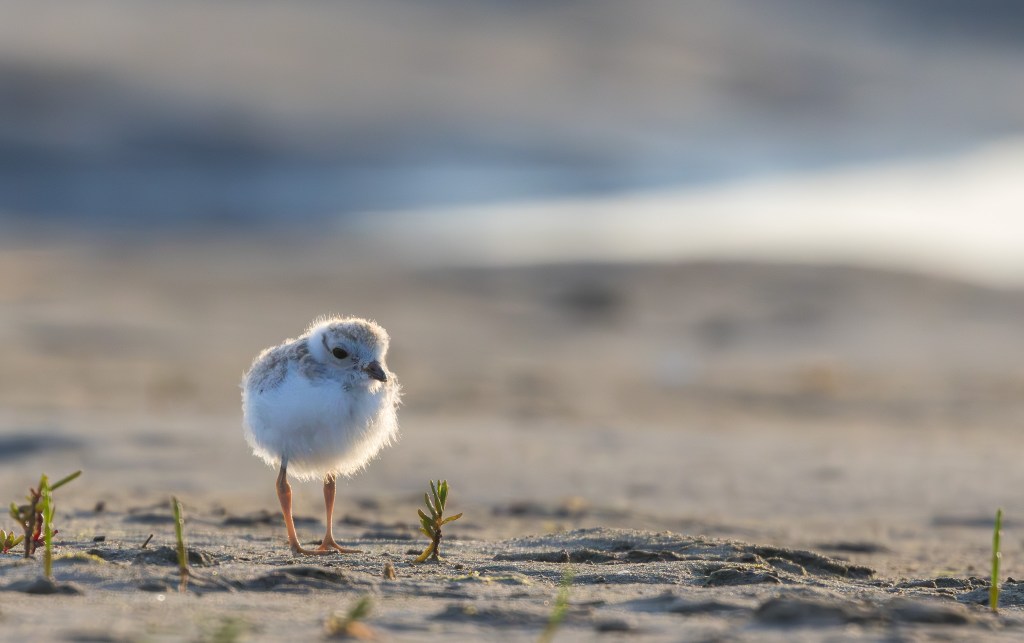
Maine Audubon and town volunteers regularly monitor beaches, putting up stake-and-twine fencing and informative signage to alert beachgoers to nesting activity. If you see fencing or signage, consider setting up in a different part of the beach or moving farther away from the fenced-off areas. Keep in mind that beach games should be at least 100 feet away from protected areas, and kites should not be flown within 650 feet of nests because plovers can mistake them for a circling predator and abandon their nest.
On crowded days when space is hard to come by, the plovers themselves provide warning signs that you are too close. The first sign is the piping plover’s distinctive peeping call, which may be trying to divert your attention away from its nest or chicks. Then cunning adults may stick out one wing, feigning an injury to lure you away from the area. If you see this behavior, stop and look around carefully for a nest or chicks before proceeding.
In addition to being aware of their presence and giving them space, beachgoers can help out by keeping a clean beach and following local ordinances around pets. Fill in any deep holes before leaving the beach because newborn chicks can stumble into deep holes and become trapped.
Off-leash dogs often chase off birds, disturb nesting activity, and even injure or kill adults and chicks. Outdoor cats are another frequent issue for the birds, so please keep cats indoors during nesting season.
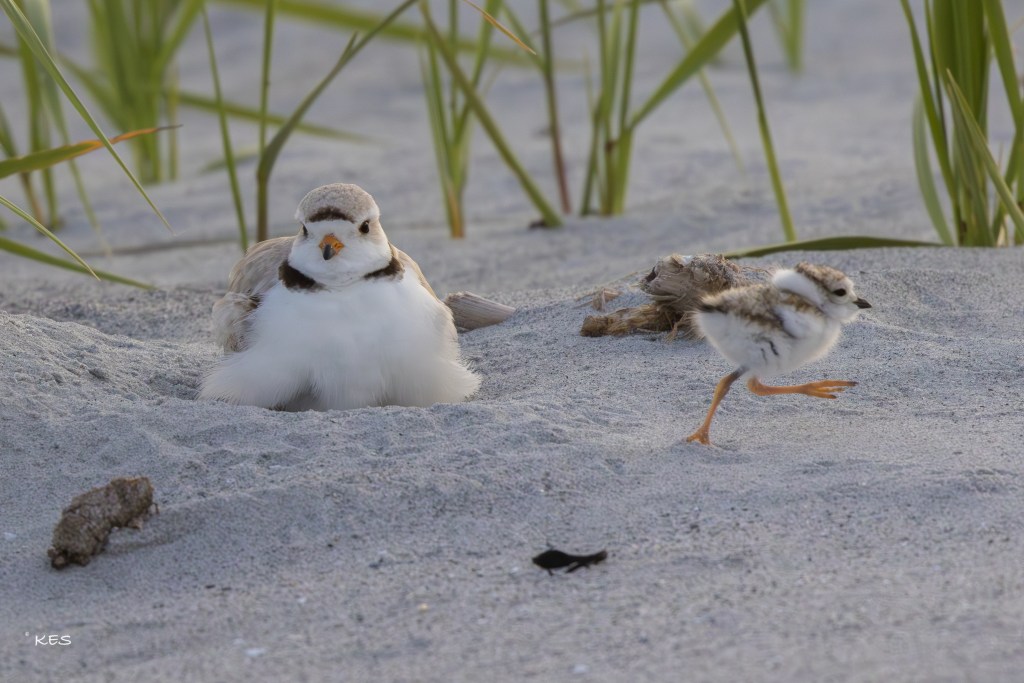
Piping plovers have recovered considerably from the lone pair documented when this project began in 1981. Despite this progress, these birds are still endangered in Maine and threatened federally. Their small numbers mean that local beachgoers can have an outsized effect in protecting nest sites, watching for safety hazards and informing neighbors and tourists. They continue to face threats from habitat loss and other human-caused factors. The community can be part of their continued recovery by supporting conservation efforts and being willing to share the beach.