KENNEBUNKPORT – The Town of Kennebunkport marked the official completion of the Cape Porpoise Pier renovation earlier this week with little fanfare in a brief ribbon-cutting ceremony.
Construction both in and out of the water for an almost two-year period has affected access and parking at Bickford Island, which is home to three restaurants, the loading facilities and dock for commercial fishermen, and a popular lookout to views of Goat Island Lighthouse and the pristine Cape Porpoise Islands.

While the construction has been a significant inconvenience for many, the improvements are also significant: the new facility includes a harbormaster office with visibility to monitor the boats, a larger bait storage area, a pump-out station, a wider pier entrance allowing access for multiple trucks, and an additional hoist for loading and unloading catch and gear. The harbormaster can now interact with pier users and mooring holders from the office via a new point-of-sale system.
For the public, the addition of new floats on the south side of the structure, including a clearly marked, raised pedestrian sidewalk along the outside of the pier, are big improvements. This design also allows public access to the new pump-out station.
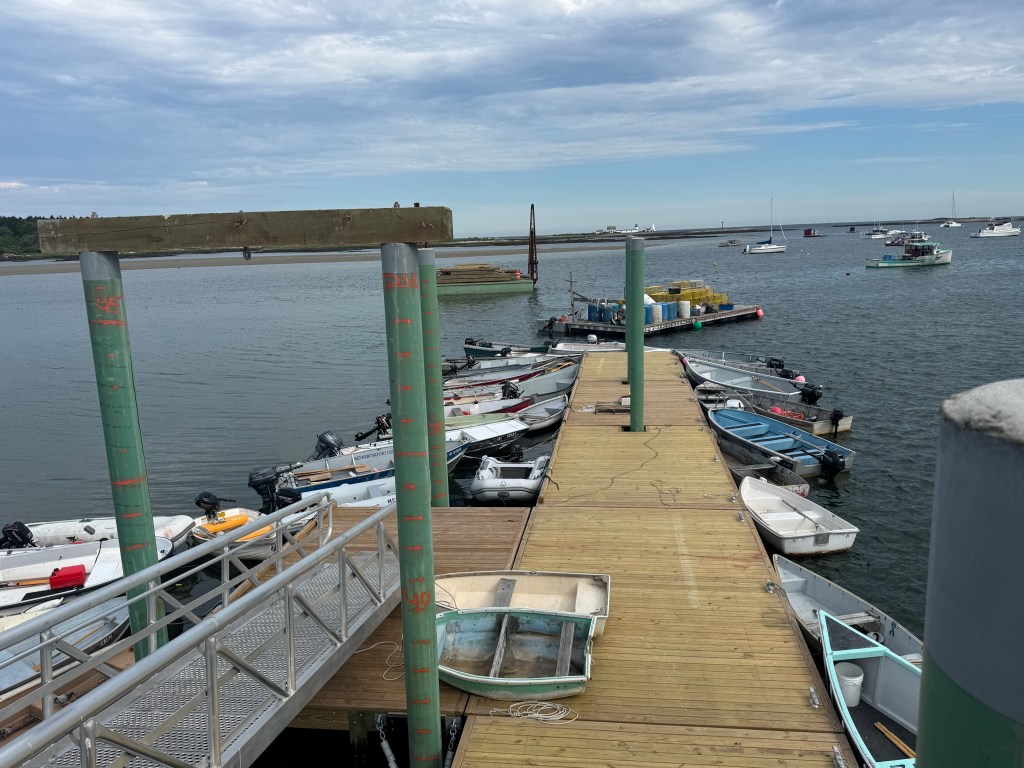
Importantly, the new dock was built to be two feet higher, providing a reprieve from the kind of high-water storm flooding seen in the winter of 2024.
“This project wasn’t about building a bigger pier—it was about preserving one of Maine’s iconic working waterfronts. The improvements make the facility safer, more resilient to coastal storms and sea level rise, and better able to serve commercial fishermen and the public for decades to come,” said Laurie Smith, Kennebunkport town manager.
While the project is mostly completed, construction equipment remains on the scene. According to Smith, “Currently the contractor is finishing up the north pilings—which need to be embedded in rock—the fuel stations, and the last piece will be the installation of the solar panels.

The $8.6 million project was funded primarily with state and federal dollars, with $1.4 million coming from the town.