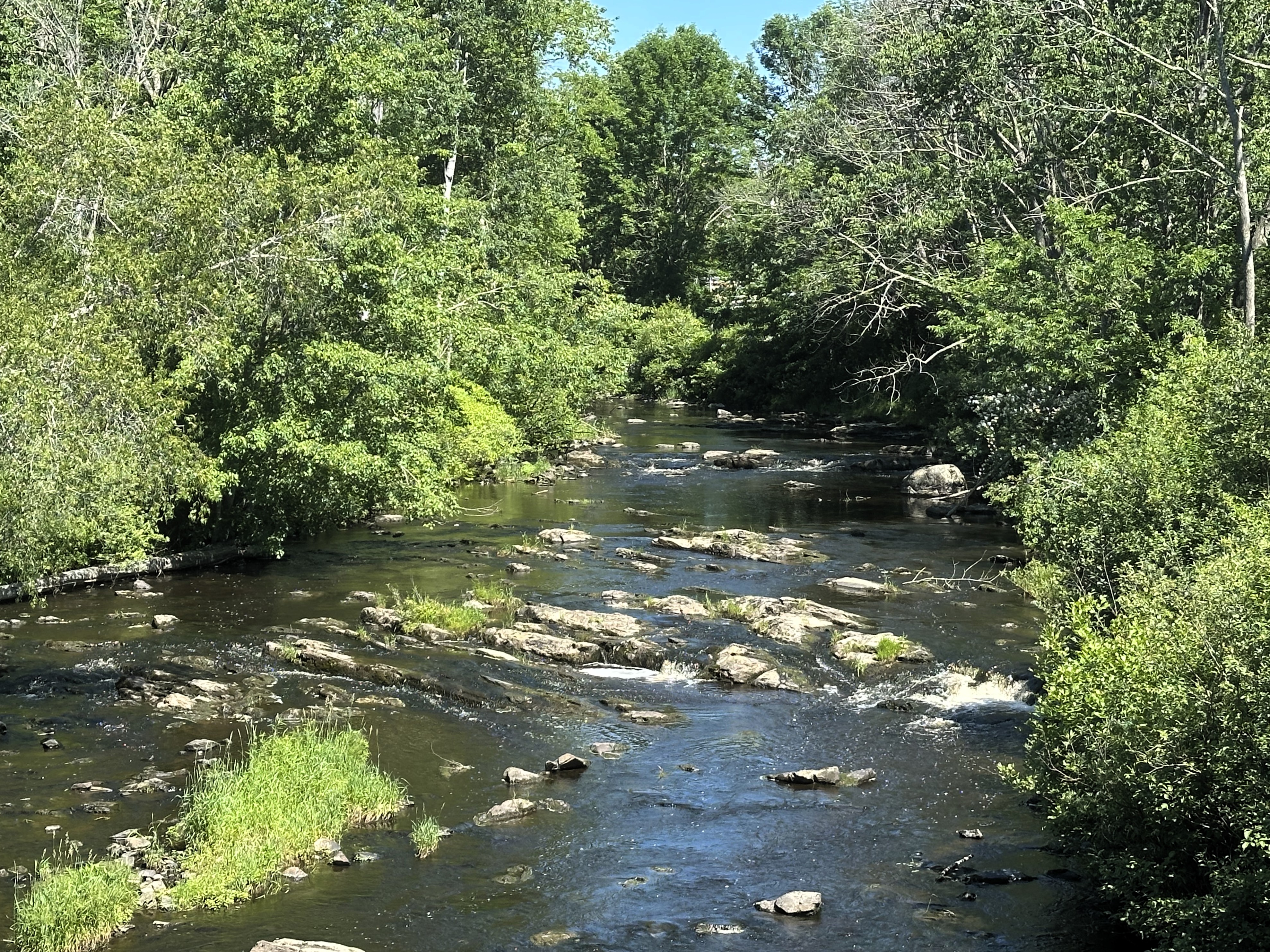
Fewer than 5% of Maine’s rivers and streams are classified by the Maine Department of Environmental Protection as impaired. The Kennebunk River is one of them. A March 2026 study prepared by FB Environmental Associates confirmed the results of over 15 years of data collection.
The study was grant funded and prepared on behalf of the Southern Maine Planning and Development Commission for the towns of Kennebunk and Kennebunkport.
The report built upon data gathered under the DEP’s Volunteer River Monitoring Program and a number of shorter-duration studies conducted by the DEP and Maine Healthy Beaches.
The study was conducted in the summer of 2025 and concluded that bacteria levels “exceeded state criterion at all sites,” that “nutrients continue to be elevated under all weather conditions” and “across all sites, the dissolved oxygen saturation threshold was not met for 52% of measurements.”
The primary sources of high bacteria, high nutrients and low dissolved oxygen are believed to be agricultural activities (fertilizer and livestock), wildlife, failing septic systems and stormwater runoff from intensely developed areas.
Water samples were taken at 10 sites in Kennebunk, Kennebunkport and Arundel, ranging from the tidal estuary to the river’s upper reaches. Samples were taken at salt and fresh water sites as well as from the main channel and several tributaries.
The assessment of the Kennebunk River’s water quality included the following findings:
Bacteria – According to FBEA, historical data from 2005 through 2023 indicates “a diffuse and occasionally severe fecal bacteria contamination throughout the watershed”. VRMP data supports this conclusion. Thirty-eight percent of 732 samples taken by VRMP volunteers between 2010 and 2025 at six sites from Dock Square to Perkins Lane exceeded the DEP’s bacteria thresholds.
Until now, little has been known about the source of the bacteria. It was assumed to be a mix of agricultural (fertilizer and livestock), natural (wildlife) and human sources. However, the 2025 study made use of relatively new technology – DNA testing – to partially answer the source question.
The 2025 testing found that five sites tested positive for human fecal mtDNA, suggesting that failing septic systems are an important contributor to the bacteria problem. The relative quantity of human mtDNA was low (2 to 3 on a scale of 1 to 10) “indicating a lower immediate risk of pathogen exposure compared to medium to high levels.”
Nutrients – Excessive nutrients (along with temperature and flow) contribute to low dissolved oxygen levels. The highest nutrient concentrations of nitrogen and phosphorus were found in freshwater sites upriver. Concentrations were highest in wet weather “indicating stormwater-driven inputs… with contributions from fertilizer use, agricultural activities, organic waste, and/or wastewater sources.”
It is important to note that there are very limited historical nutrient data. All sites have six or less data points. In its “next steps” discussion, FBEA suggested expanding VRMP baseline sampling to include total nitrogen and total phosphorus.
Dissolved oxygen – The amount of oxygen in the water is critical for sustaining aquatic life. Low percentages adversely affect fish and their food. “Across all sites, the dissolved oxygen saturation threshold was not met for 52% of measurements.” Low dissolved oxygen can result from high temperatures, low flows and high levels of phosphorus and nitrogen.
Weather – Both bacteria and nutrient levels were consistently higher in wet weather, confirming that stormwater runoff is a major contributor to elevated bacteria counts in the river and also at the beach. Saturated soil can compromise septic systems. There is a proven correlation between heavy rainfall and heightened bacteria levels at the beach. At the other extreme, drought conditions like those experienced by Maine in 2025 can also impact water quality.
Mainstem versus Tributaries – Concentrations of pollutants were consistently higher in the smaller tributaries (Duck Brook, Goff Mill Brook) where there is low flow (runoff is less diluted) and agricultural uses predominate.
FBEA provided the following recommendations for next steps:
- Address probable contamination sources at two top priority sites upriver.
- Conduct education and outreach to residents on proper septic system maintenance and landscaping practices.
- Continue to implement action items from the 2021 Kennebunk River Watershed Management Plan.
- Consider expanding VRMP sampling to include additional sites and parameters and/or hiring a consultant to perform additional testing. Consider supporting lab costs with funding from each watershed town.
- Expand dissolved oxygen sampling across different tidal phases.
Based on a check-in with the Kennebunk and Kennebunkport town staffs, there are no immediate plans to address FBEA’s recommendations. However, Laurie Smith, Kennebunkport town manager, offered the following: “The value of this study is that it moves us from assumptions to data. We now have a much clearer understanding of where our challenges exist and can work collaboratively with property owners, businesses, conservation groups and state partners to protect and improve the Kennebunk River for future generations.”
For those seeking more information, here are the links to:
- March, 2026 Kennebunk River Water Quality Study
https://www.kennebunkmaine.us/DocumentCenter/View/20699/KennebunkRiver_WaterQualityStudy-March-2026
- Maine DEP Volunteer Rive Monitoring Program
https://www.maine.gov/dep/water/monitoring/rivers_and_streams/vrmp/index.html
- The Kennebunk River Watershed-Based Management Plan 2021-2031
https://wellsreserve.org/project/kennebunk-river-watershed-based-management-plan
____________
Betsy Smith is the coordinator for the Maine DEP VRMP program for the Mousam and Kennebunk Rivers and on the board of The Local News