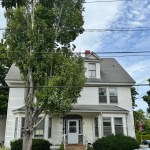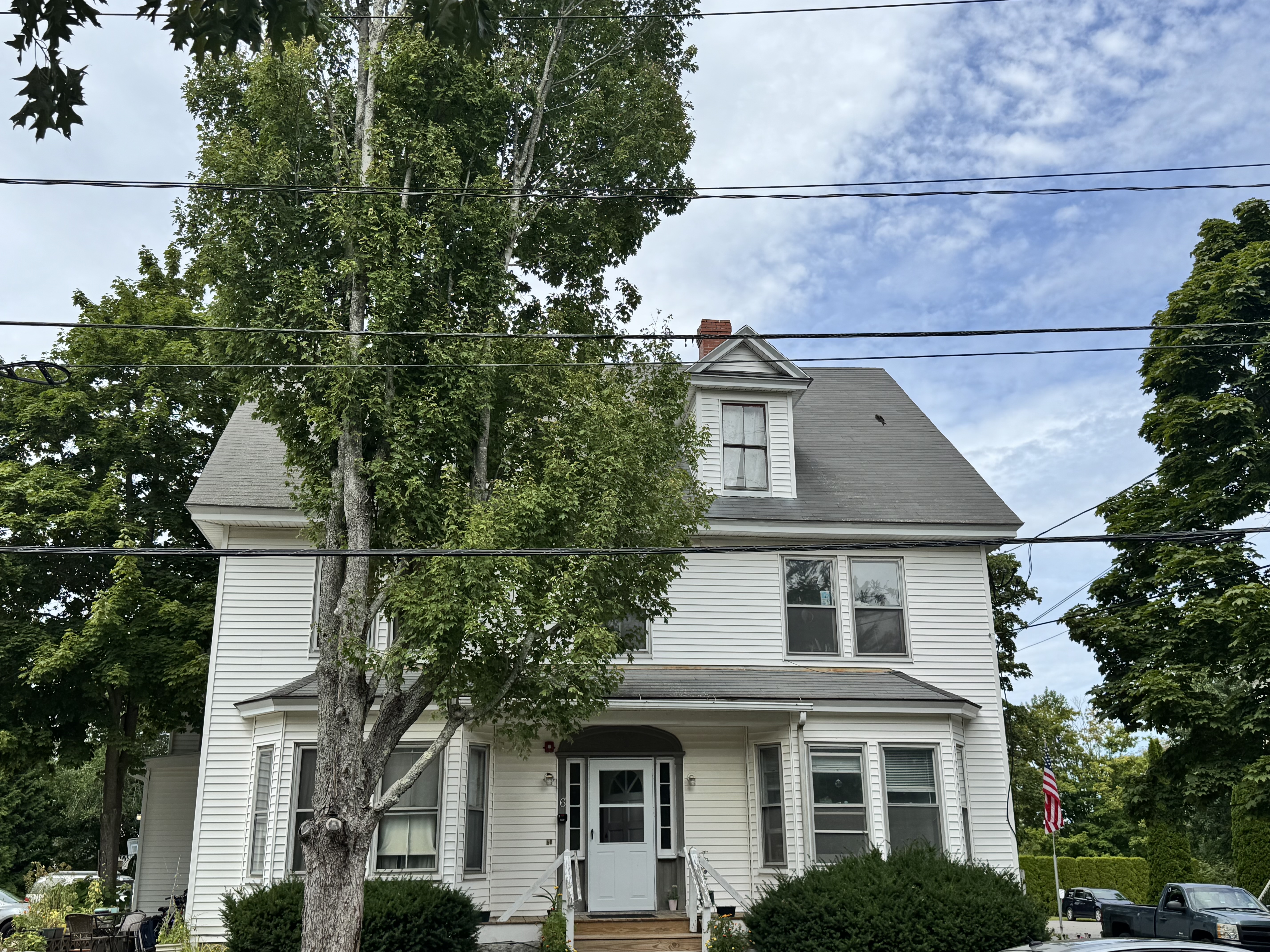
KENNEBUNKPORT – The classic white clapboard house at 6 North Street near Dock Square is one you might not notice – older, sprawling, slightly shabby. But its eight apartments are home to residents aged 29 into retirement, several of whom have lived there for over 20 years. The building’s recent acquisition by the Neighborhood Housing Trust from its owner, South Church Housing Corporation, now guarantees these apartments will remain affordable and that the building will be preserved as much-needed workforce housing just a few blocks from Dock Square.
Since 1975, the building, with five one-bedroom units and three two-bedroom units, has been owned and operated as low-cost housing by the South Church Housing Corporation, a non-profit formed by members of the next door South Congregational Church. After 50 years of stewardship, that organization sought another local housing group to keep the building as workforce housing.
The Neighborhood Housing Trust’s goal at North Street Apartments is to provide housing at 30% of household income. According to Larissa Crockett, executive director, the first steps were to verify residents’ income, adjust their rental cost (which includes heat and water) to that 30% figure, and put leases in place. She noted that residents living on very low, single-source incomes such as a veteran’s pension or minimal Social Security saw significant rent decreases. “We saw people who would repeatedly end up with only a few dollars in their accounts at the end of the month,” she said. “Now they have more and that feels good.”
Crockett emphasized that the apartments are not subsidized housing, there are no Section 8 vouchers in place. “The building is self-sustaining, and that is only possible because there is no debt service on the house.” She said the NHT’s next goal is raising money for maintenance, as “the building’s roof was last replaced in 1986, the heating system is decades old and all the 50 windows need replacing.” She added that anyone who would like a long-term memoriam for a beloved grandfather or mother could claim naming rights for the property in exchange for a significant donation to support this upcoming maintenance.
Crockett noted that to recreate a large building like this would today cost between $3.2 and $3.6 million, adding that two small recently renovated condos just a few hundred feet away have sold for “between $1.5 and $2.5 million. So if sold privately, this property would have been a teardown and rebuilt as a single-family building likely used as only a seasonal home.”
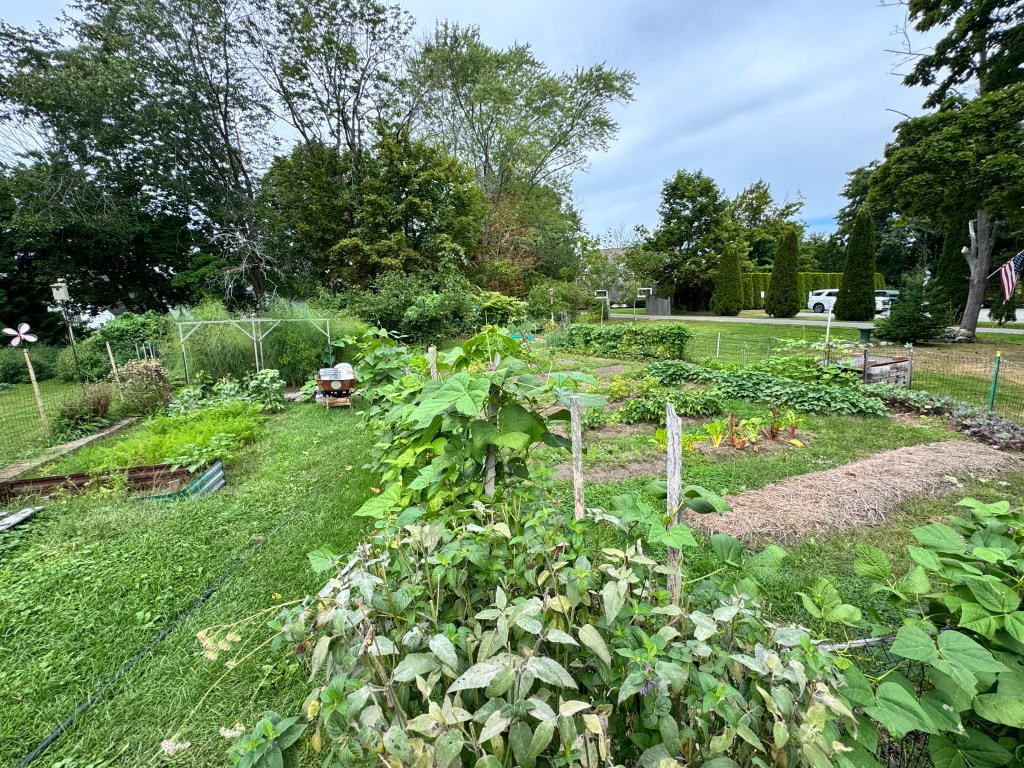
She added that several of the tenants, as retired members of the community, are very active in the volunteer community, and a father-son duo maintain a backyard vegetable garden and share produce with all the tenants. “The tenants who call this building home serve our community as volunteers and workforce, and they care for each other as neighbors.
According to materials from the Kennebunkport Historical Society, the building, which is located next to South Congregational Church, has a long history of filling housing needs in town as it was originally built in 1895 by Capt. Joseph H. Jeffery as a rooming house. A report compiled by the historical society provides the following information:

“In 1975, Rev. Howesproposed that the South Congregational Church purchase the building, then owned by a Sanford Dentist, Dr. Rudolph Johnson, and run it under an arrangement with the Department of Housing and Urban Development as decent low-cost housing for the elderly and for those who could not otherwise find affordable housing in Kennebunkport. The proposal was narrowly rejected at the Kennebunkport annual meeting. A group of church members, many of whom had supported Rev. Howe’s proposal, then organized as South Church Housing Corporation and purchased the property.”
As part of the transfer, one of the apartments at 6 North Street did become available, according to Crockett. At about the same time, a different Kennebunkport resident had reached out to Jennifer Brooks, director of public health and GA administrator for the town, saying they needed a place to live – their landlord was renovating and their current rental was ending. Brooks got in touch with the NHT and found that an apartment at North Street as available. Once the qualification process was completed and the resident was accepted, Brooks says, “It was a happy ending,” as the resident was able to find an affordable home in the town they wanted to be in.