
KENNEBUNKPORT — A new state law designed to create more affordable housing in Maine could end up changing the look and feel of Kennebunkport’s two historic districts.
The law requires towns to allow smaller house lots, which makes it easier to build more homes in less space. Historic districts can be exempted from this rule — but only if they already have “design standards,” or written rules about what new buildings should look like. Kennebunkport’s two districts don’t have any such rules right now.
Land is expensive, so allowing smaller lots is meant to increase the number of lower-priced homes available. But in the historic districts, that could mean squeezing up to four tiny homes onto lots between older, historic structures — which could change the overall look of the neighborhood.
Last spring, the select board asked the town’s growth planning committee to come up with a set of standards that would protect the character of the two historic districts without affecting the property rights of homeowners. The committee has been working since then to find a middle ground that would be reflected in a new ordinance.
Most of Kennebunkport is zoned for one-acre lots, and by law those can’t be split into smaller ones. But the new state law lowers the minimum lot size to 5,000 square feet — slightly over a tenth of an acre — in “growth areas,” meaning places with public sewer and water. Both the Kennebunkport Village Historic District and the Cape Arundel Historic District fall inside growth areas, so they’re affected.
Under the new law, if a property meets basic setback requirements, an owner could carve a smaller lot out of their land and build another home, or as many as four 1,250-square-foot homes, with very little oversight of how it fits in with the surrounding neighborhood.
Dan Saunders, who chairs the growth planning committee, said the group is trying to strike a balance.
“If we do nothing, we run the risk of something happening in the districts we may not like,” he said. “We don’t want to be too heavy-handed, but we want change. We want to put in a standard.”
The committee looked at similar rules from other towns across Maine and New England, he said.
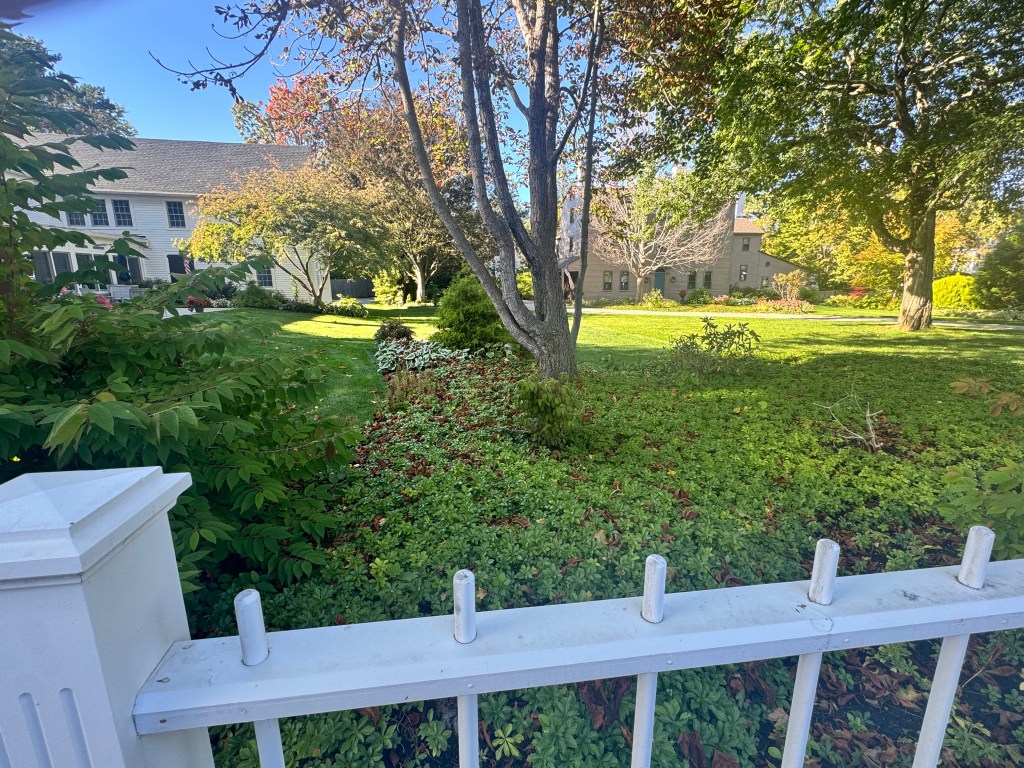
Historically, Kennebunkport has kept oversight of these districts to a minimum. Homeowners there have avoided much of the paperwork and red tape that usually comes with owning a home in a federally recognized historic district, and generally have taken good care of their properties. The town is highly regarded for the charm of its older homes.
But Saunders noted that the town can’t predict future owners.
“We don’t know who’s going to own properties,” he said. “That’s the risk of leaving things the way they are now.”
The committee’s draft would require a permit for new construction, home additions or other visible architectural changes, but only if they’re visible from the street. Things like routine maintenance, paint color, lighting, landscaping and interior changes would not need a permit.
At the select board’s Sept. 24 meeting, members said again that they don’t want overly strict rules on what homeowners can do, which is why the focus is on new construction and additions visible from the street.
Board Chair Mary Beth Glibert said the standard the town is aiming for is “the look and feel of what we have today.”
The select board agreed the planning board, which would be responsible for administering a new ordinance, needs to weigh in first. Once the planning board provides feedback on the proposal’s clarity and practicality, the town will open it up for public education and discussion, to include an article in the town newsletter, a letter to owners of buildings in the historic districts, and public hearings.